 2
2
The open hacker's multitool, reborn on the RP2350. A pocket lab for radio, analog, RFID, CAN, retro gaming, onboard Linux — and AI agents that write firmware with you.
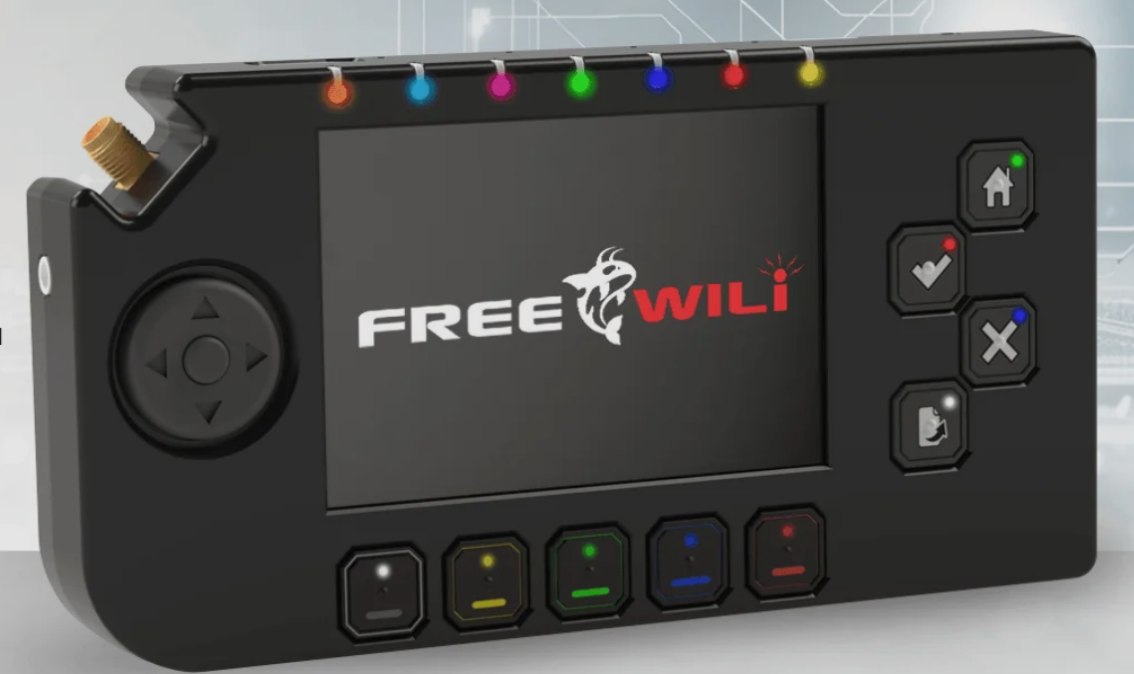
Everything, in one pocket.
FreeWili2 packs a full electronics lab, a software-defined radio bench, and a games console into an open, scriptable, agent-ready tool.
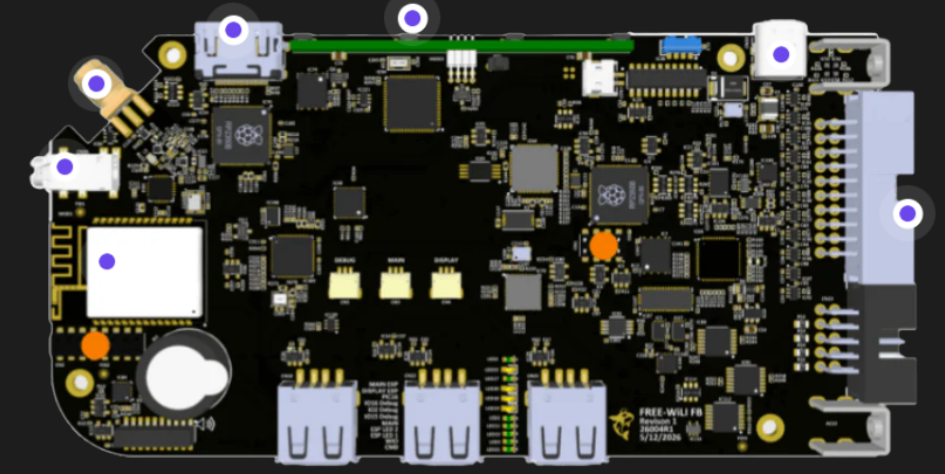
Upgraded to the RP2350.
FreeWili launched at DEFCON 2024 on the RP2040 — the very same day Raspberry Pi announced its successor, 100 yards from our booth. So we rebuilt it. Both the main and display CPUs are now RP2350: far more performance, headroom, and low-power smarts, and mostly software-compatible.
Each CPU gains 8 MB of serial SRAM, and the trusty ICE40 FPGA stays on board for the jobs even dual cores and PIO can't touch — like SPI-slave emulation.
- Dual RP2350
- 8MB SRAM each
- ICE40 FPGA
- PIO + dual-core
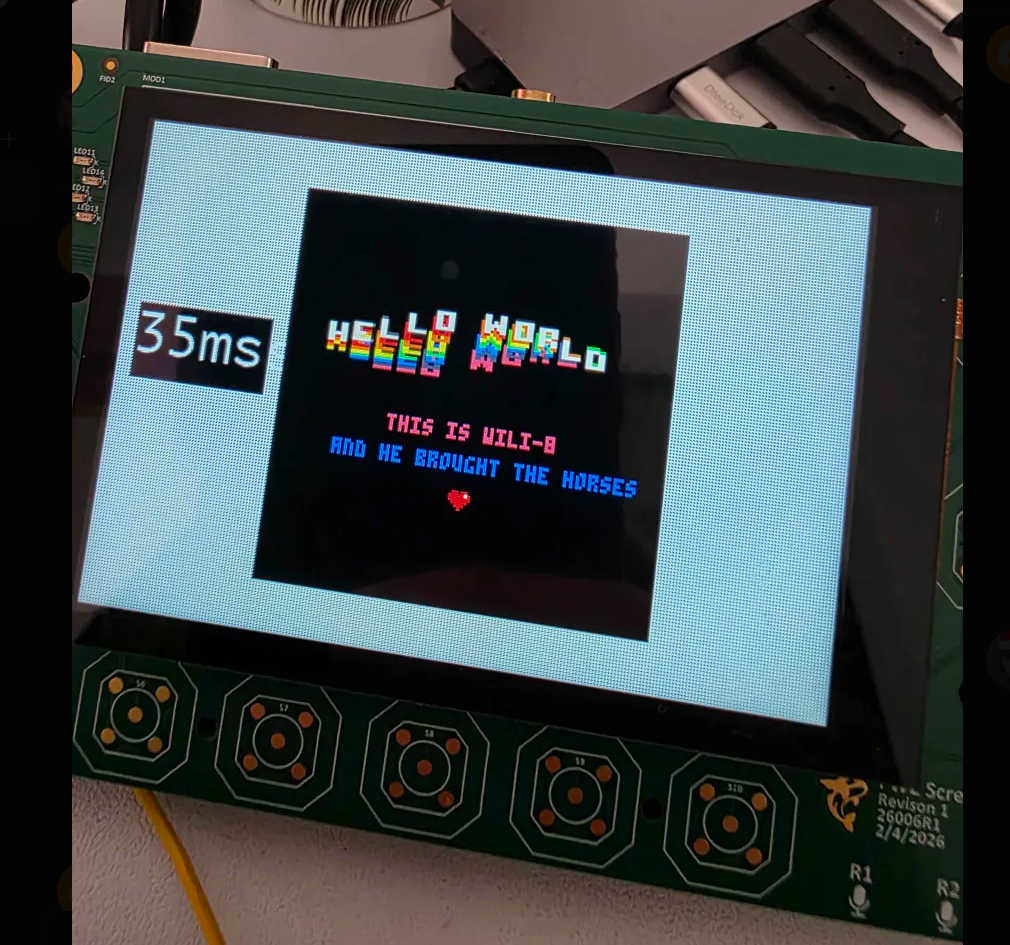
A 3.5″ capacitive touchscreen.
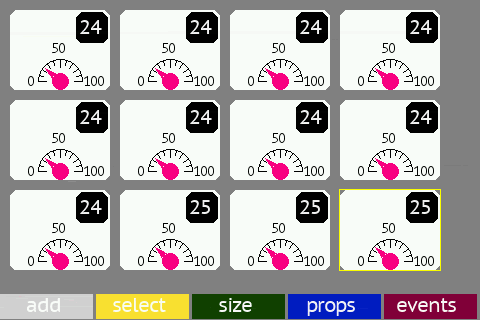
480×320 of color, driven by the RP2350's HSTX. Around it: a full 5-way D-pad, four A/B/X/Y buttons (home · ok · cancel · page), five under-screen context keys, and an innovative two-press-per-letter keyboard.
Tilt it, too — the onboard IMU turns physical position into an input axis.
- 480×320 cap-touch
- 5-way D-pad
- A·B·X·Y
- 5 context keys
- motion input
Go full pirate radio.
WiFi is now built in — an upgraded ESP32-C5 with 5 GHz, using none of your GPIO. SubGHz rides a single antenna that switches between a CC1101 and a LoRa radio.
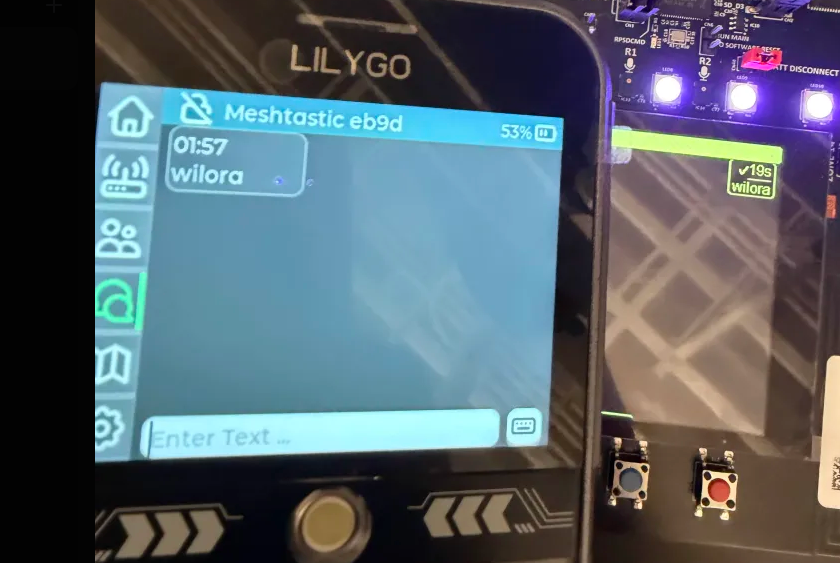
We ported Meshtastic, so FreeWili2 talks to the mesh straight out of the box.
- WiFi 5GHz · C5
- CC1101
- LoRa
- Meshtastic
Expandable, software-defined I/O.
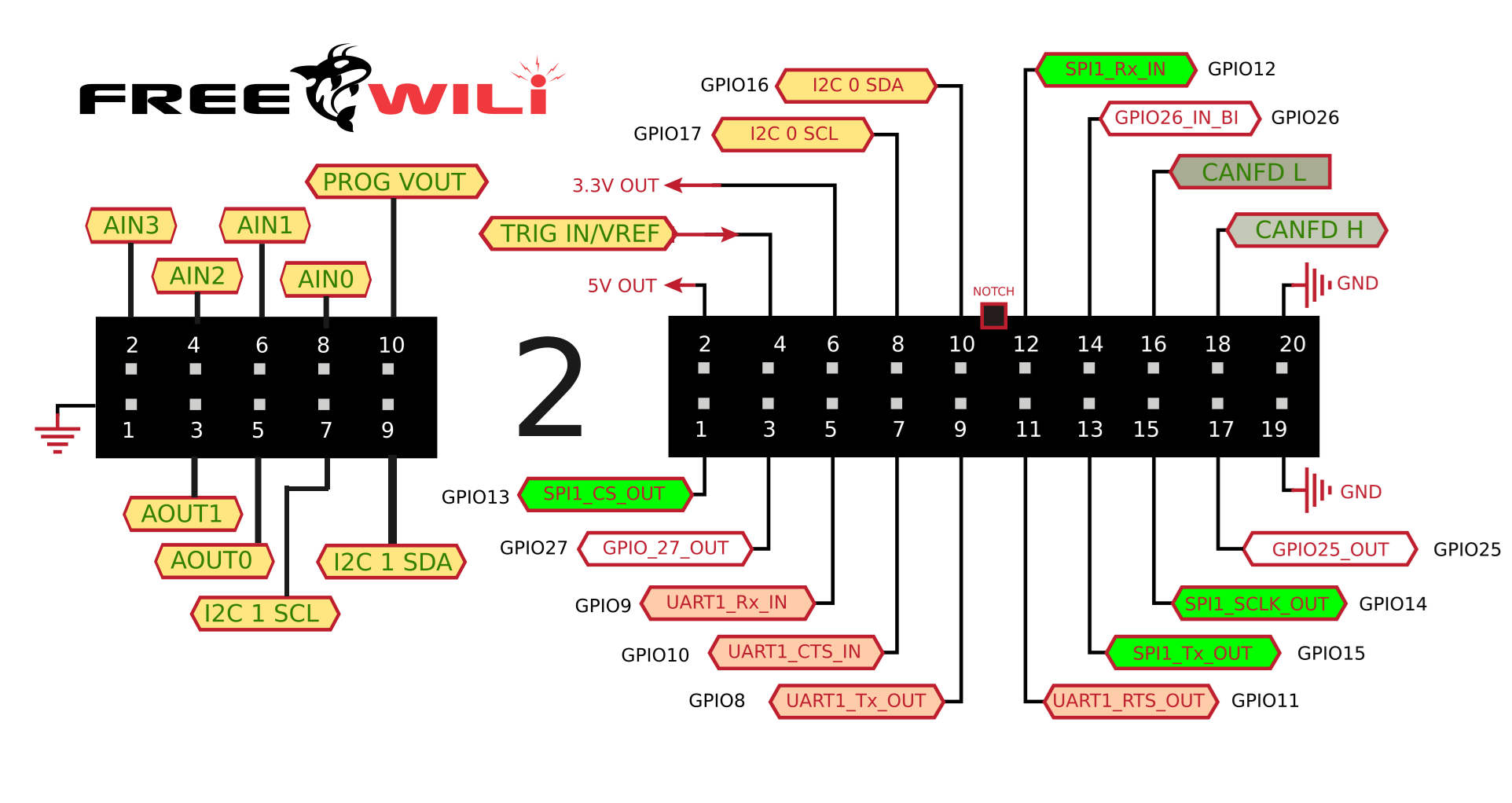
Keep the FreeWili 1 20-pin connector (Orcas still fit), plus a new 10-pin analog header and rigid mounting posts. Set the IO voltage in software from the 5V rail, 3.3V rail, the pin itself, or the onboard programmable supply — and measure it with an ADC.
0–5V analog in (op-amp + PGA front end), 0–5V analog out at 25 kHz, a 1–5.5V / 1.5A programmable supply with a MOSFET crowbar for voltage glitching, and the old debug pins reborn as CAN FD at full 8 Mbit.
- CAN FD 8Mbit
- 0–5V in/out
- PGA + window comparator
- prog. PSU + crowbar
A whole Linux machine inside.
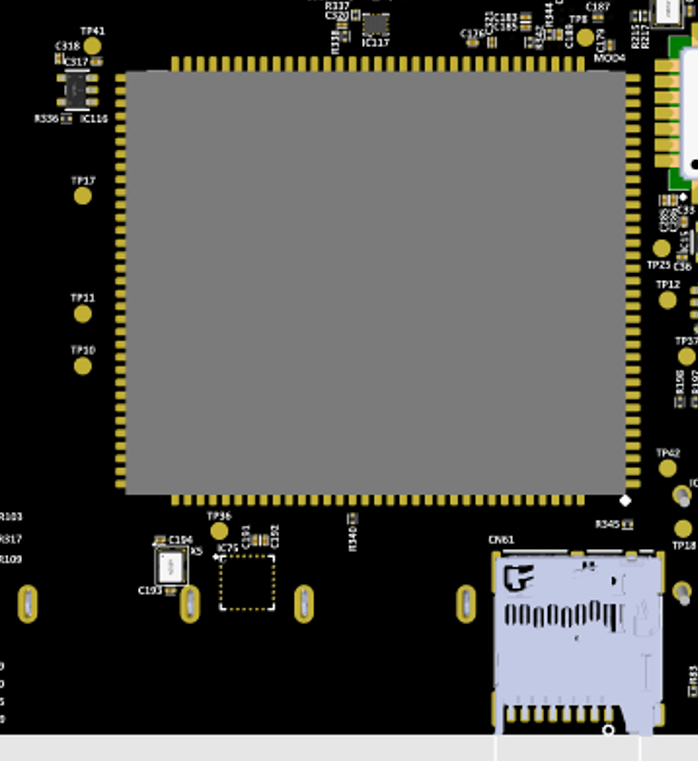
FreeWili2 supports the Raspberry Pi CM0 module, wired straight to the onboard FPGA, the internal USB hub, and the 3rd host port. It runs headless by default and talks to FreeWili2 exactly like a Linux app would — so drivers map cleanly onto our Python API.
CM0 supply is famously thin, so the board works perfectly without it — and we're exploring letting you bring (and solder down) your own.
- RPi CM0
- FPGA link
- USB gadget + host
- own SD card
Three host ports. One scriptable.
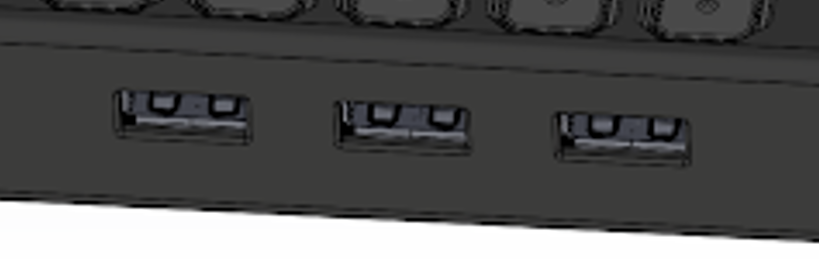
Plug in a mouse, keyboard, joystick, GPS, serial adapter, thumbdrive — whatever TinyUSB can drive. Two 12 Mbit ports hang off the display CPU; the third is full 480 Mbit high-speed. The display CPU controls 5V host power, so each port is an easy on/off supply.
A second PIO-based USB port enables scriptable USB — BadUSB experiments and USB-stack testing.
- 3× host
- 480Mbit HS
- switchable 5V
- scriptable / BadUSB
9-DOF motion + environment.
A full IMU (BMI323) plus magnetometer (BMM350) opens up motion and orientation as input. An OPT4001 ambient light sensor and an SHT40 temperature/humidity sensor round out environmental awareness.
Audio levels up too: a 3.5 mm headphone/mic jack and a 4-mic phased array that, with the RP2350's spare cycles, makes real beamforming possible. Viva Las Vegas, loud and clear.
- BMI323 IMU
- BMM350 mag
- OPT4001 light
- SHT40 temp/RH
- 4-mic array
The answer to every DEFCON question.
At both launches, every other question was about RFID. So: 125 kHz RFID — where the RP2350's fast ADC and PIO get genuinely interesting — plus NFC via the ST25R3916B. IR is upgraded too: a stronger transmit LED, a real IR window in the case, and better Rx/Tx orientation.
- RFID 125kHz
- NFC · ST25R3916B
- IR Tx/Rx
- I2C Orca + EEPROM
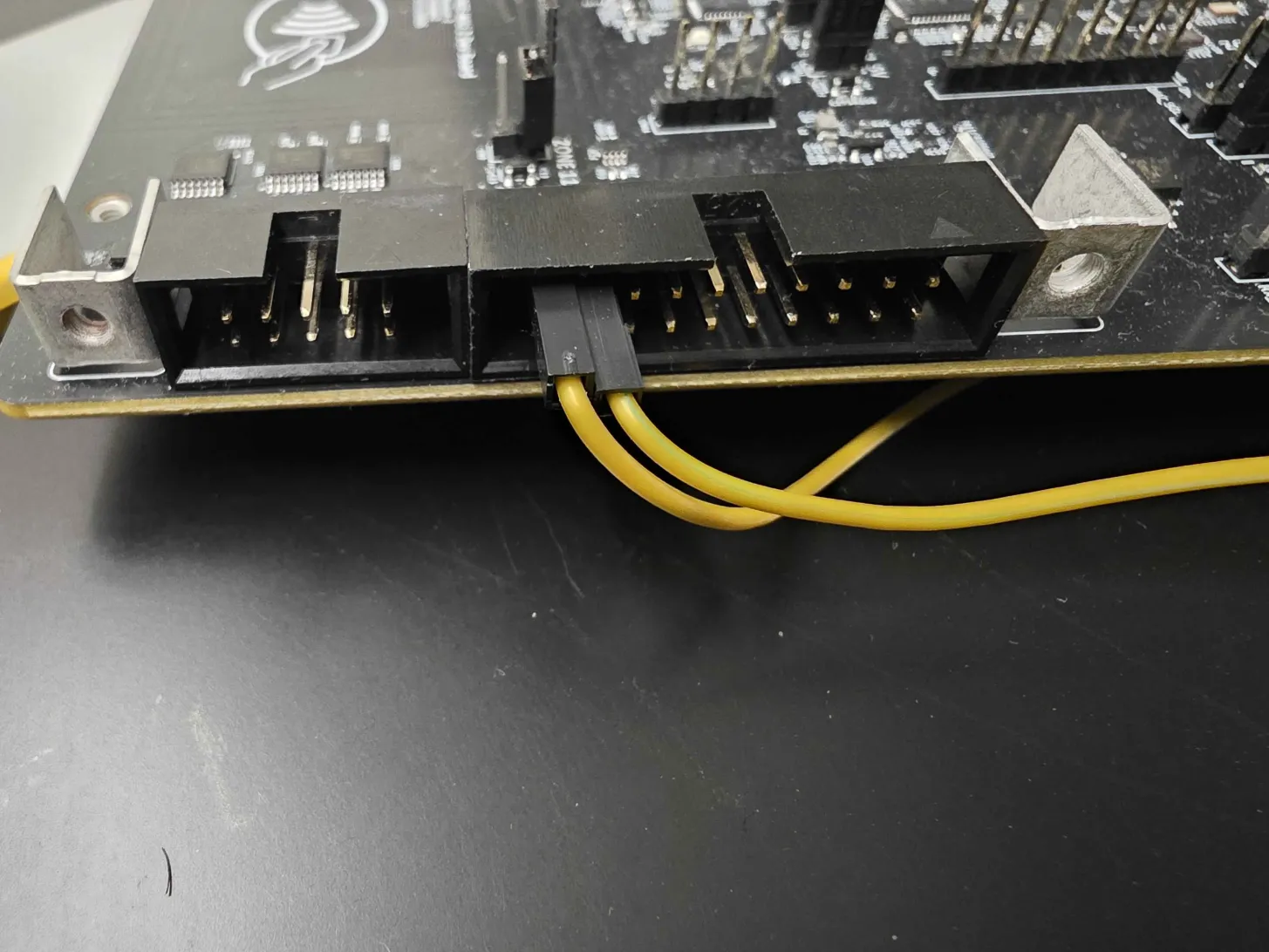
17 power zones, one tiny brain.
A dedicated ultra-low-power micro switches 17 power zones on and off dynamically. Sensors wire into the ULP as wake sources, the battery tripled to 3000 mAh, and the ULP squeezes the most out of whatever USB power is available — while managing charging.
A 7-port internal hub feeds it all: main CPU, SD reader, ESP32-C5, USB script engine, debug CPU, high-speed FTDI, and the Linux CPU / 3rd host port.
- ULP micro
- 17 zones
- 3000mAh
- 7-port hub
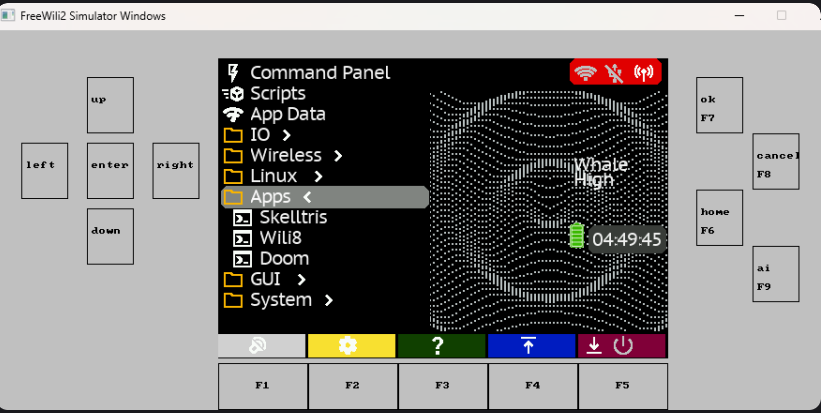
Built for agents.
FreeWili2 is a platform for running any code — software done by the user, for the user.
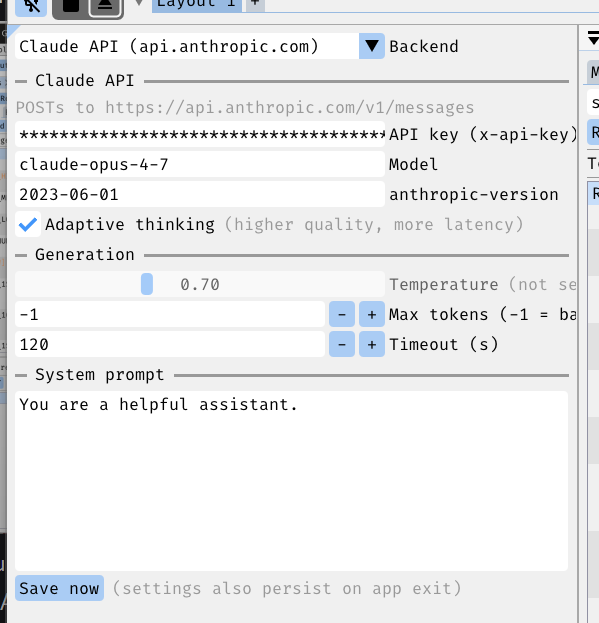
Claude Code, in the loop.
This new age of AI lets tools like Claude Code write and debug your embedded application the way you want it. FreeWili GUI ships with integration for Claude and LM Studio for local models — and our open hardware docs plus Agent.md files give agents everything they need.
Onboard debugging seals the loop: an enhanced Raspberry Pi Debug Probe flashes and debugs both RP2350 cores and the LoRa processor — in the box.
- Claude API
- LM Studio (local)
- Agent.md
- in-box debug
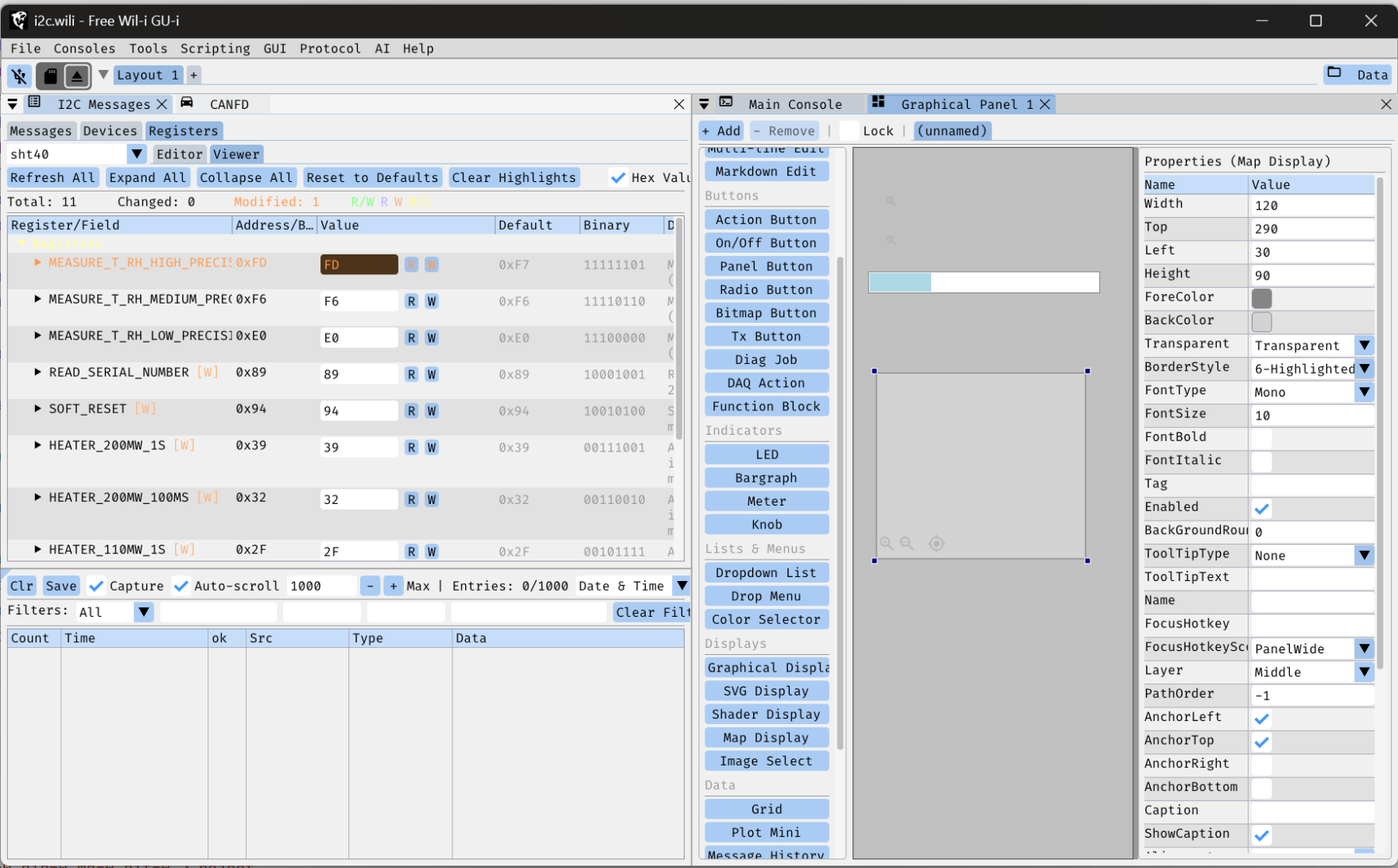
No install. No dependencies.
FreeWili GUI is a zero-dependency, USB-drive-capable app — launch it straight from the device's SD card, no install needed. It's loaded with new features: I2C component databases, integrated WASM compilers and debuggers, and point-and-click GUI drawing.
Draw to the screen the same way whether you're on the device, in WASM, or over the headless Linux API.
- WASM compiler/debugger
- I2C DB
- GUI builder
- portable
The SD-card UF2 bootloader.
My favorite. The SD-card bootloader loads applications written by anyone — first-party, third-party, or hand-rolled by an agent. Drop a UF2 on the card and run it. Two microSD slots (one for Linux, one for the device) and a runtime-swappable high-speed USB SD reader mean fast file exchange and broad OS support.
The reader even works with the Raspberry Pi Imager — so you'll never lose your card reader again.
- UF2 from SD
- dual microSD
- USB SD reader
- RPi Imager
Fruit Jam-compatible. Doom-approved.
The display CPU is nearly 100% compatible with Adafruit's Fruit Jam — port a Fruit Jam app to FreeWili2 with barely a change. Our team brought up PICO-8 and, of course, Doom.
It runs Doom.
Comfortable buttons, a real D-pad, and a Fruit Jam-class display CPU make retro gaming play as good as it can on a hacking tool. PICO-8 brought up its reality-console fantasy world; Doom brought the demons. A full-size DVI connector (HSTX-driven) puts it all on the big screen.
- Fruit Jam compatible
- PICO-8
- Doom
- DVI out
The Fruit Jam connection.
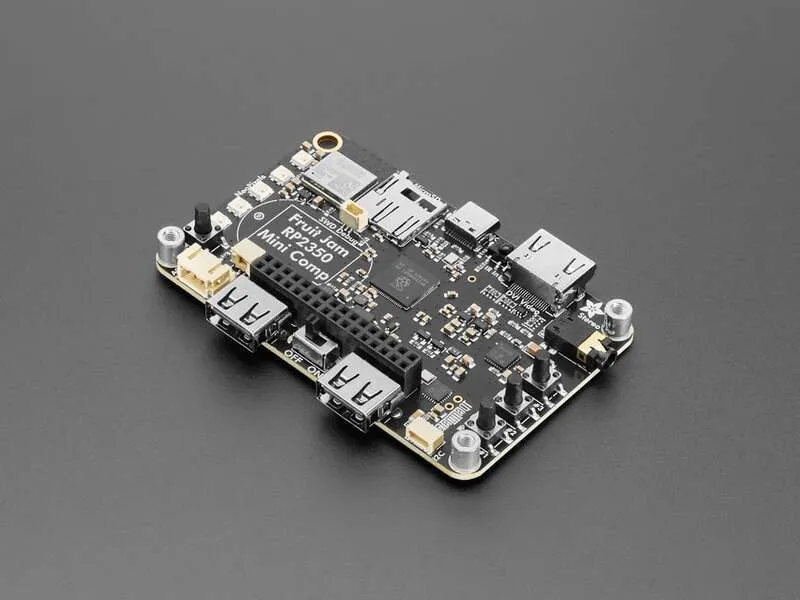
Adafruit's RP2350-based Fruit Jam mini computer shares almost all of FreeWili2's display-CPU hardware (a few pins differ). That compatibility is the bridge: the broad Fruit Jam software ecosystem comes along for the ride, and it's what hinted at USB host in the first place.
- RP2350 sibling
- shared HW
- easy ports
Specifications
Compute
- Main / Display
- 2× RP2350 (dual-core, PIO)
- Memory
- 8 MB SRAM / 16 MB Flash per RP2350
- FPGA
- Lattice ICE40 with 8 MB SRAM
- Linux
- Optional Raspberry Pi CM0
- LoRa
- STM32WLE5JC — STM32 with integrated LoRa
- Debug
- Enhanced RPi Debug Probe (RP2350 + LoRa)
Display & Input
- Screen
- 3.5″ 480×320 capacitive touch
- D-pad
- 5-way + A·B·X·Y (home/ok/cancel/page)
- Keys
- 5 under-screen context buttons
- Keyboard
- 2-press-per-letter
- Motion
- IMU position as input
- USB host
- Keyboard and mouse
Connectivity
- WiFi/BT
- ESP32-C5, 2.4 + 5 GHz
- SubGHz
- CC1101 + LoRa (Meshtastic)
- RFID/NFC
- 125 kHz + ST25R3916B
- CAN
- CAN FD, 8 Mbit
- Video
- Full-size DVI (HSTX)
- USB host
- 3× (2× 12 Mbit + 1× 480 Mbit)
- GPS
- Via USB host
- IR
- Tx/Rx, case window
Analog & GPIO
- Connectors
- 20-pin (FW1) + 10-pin analog + posts
- Analog in
- 0–5V, op-amp + PGA front end
- Analog out
- 0–5V @ 25 kHz
- Prog. PSU
- 1–5.5V / 1.5A + MOSFET crowbar
- IO voltage
- SW-selectable + ADC measure
- I2C
- 3.3V Orca bus w/ EEPROM
Sensors & Audio
- IMU
- BMI323 (9-DOF w/ mag)
- Magnetometer
- BMM350
- Light
- OPT4001 ambient
- Climate
- SHT40 temp / humidity
- Audio
- 4-mic array + 3.5 mm jack
Power & Storage
- ULP
- Dedicated micro, 17 power zones
- Battery
- 3000 mAh + USB-aware charging
- Storage
- Dual microSD (device + Linux)
- SD reader
- High-speed USB, RPi-Imager ready
- Boot
- SD-card UF2 bootloader
See FreeWili2 at DEFCON.
On sale at the show. Open hardware, open software, and an AI-native workflow — software done by the user, for the user.